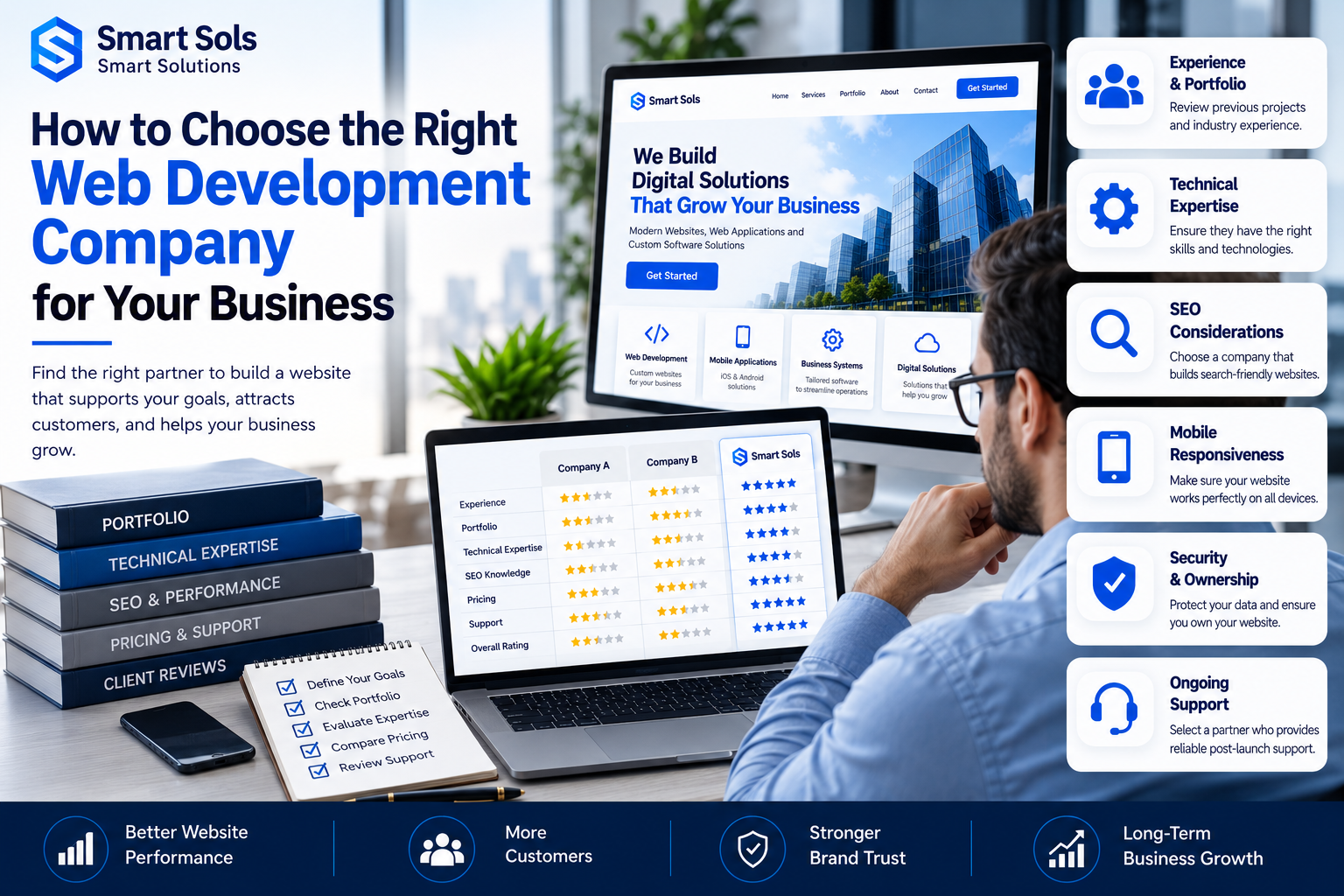
Choosing the right web development company is an important decision for any business. A professional website can strengthen your brand, attract potential customers, and support long-term growth. However, with so many agencies and developers available, finding the right partner can be challenging. This guide explains the key factors to consider before choosing a web development company.
How to Choose the Right Web Development Company for Your Business
Your website is more than just an online presence. It is an important business tool that can help you attract customers, communicate your value, and generate new opportunities. Choosing the right web development company can make a significant difference in your website's performance and long-term success.
Here are the most important factors to consider when selecting a web development partner.
1. Define Your Business Goals
Before contacting a development company, identify what you want your website to achieve.
Are you looking to increase brand awareness, generate leads, sell products online, or provide customers with access to your services?
Clear goals help developers understand your requirements and recommend the most appropriate solution.
2. Review the Company's Portfolio
A company's previous projects can provide valuable insight into its experience, design quality, and technical capabilities.
When reviewing a portfolio, consider:
- The quality and consistency of its designs.
- The functionality of completed websites.
- Whether projects are relevant to your industry.
- How well the websites work on mobile devices.
- Whether the company has experience with similar business requirements.
Do not focus on appearance alone. A successful website should also be fast, accessible, easy to navigate, and designed around user needs.
3. Evaluate Technical Expertise
Different websites require different technologies and levels of expertise.
Depending on your needs, you may require custom development, third-party integrations, e-commerce functionality, or connections with existing business systems.
Ask the company about its development process, technology choices, testing procedures, and approach to maintaining the website after launch.
The right partner should explain technical decisions clearly rather than recommending unnecessary complexity.
4. Make Sure SEO Is Considered From the Beginning
Search engine optimization should be considered during website planning and development, not added as an afterthought.
A search-friendly website typically needs:
- A logical page structure.
- Mobile-friendly layouts.
- Fast loading performance.
- Descriptive page titles and meta descriptions.
- Search-engine-accessible content.
- Appropriate heading structures.
- XML sitemaps and suitable indexing settings.
Although these practices help establish a strong SEO foundation, search rankings also depend on content quality, competition, authority, and other factors.
Ask how the development company approaches technical SEO and whether SEO requirements are included in the project scope.
5. Prioritize User Experience and Mobile Responsiveness
Visitors should be able to understand your services and find important information without unnecessary effort.
A professional website should provide clear navigation, readable content, consistent design, and obvious next steps.
It should also work properly across smartphones, tablets, laptops, and desktop computers.
Before approving a design, review important pages on different screen sizes and test the main customer journeys.
6. Understand the Pricing and Project Scope
Website development costs vary depending on design complexity, functionality, integrations, content requirements, and the amount of custom development involved.
A proposal should clearly explain what is included in the quoted price.
Check whether the following items are covered:
- UI/UX design.
- Front-end and back-end development.
- Content entry.
- Mobile responsiveness.
- Testing and quality assurance.
- Hosting and domain setup, if required.
- SEO-related technical setup.
- Training and documentation.
- Post-launch support.
Also, clarify how additional requirements and changes will be priced.
The cheapest proposal is not always the best value. Compare the scope, quality, delivery process, and ongoing costs before making a decision.
7. Ask About Communication and Project Management
Clear communication helps prevent misunderstandings and delays.
Before signing an agreement, ask who will manage the project, how progress will be reported, and how feedback will be handled.
You should also understand the approval process, key milestones, expected delivery date, and responsibilities of both parties.
A structured development process makes it easier to track progress and address problems early.
8. Check Security and Website Ownership
Website security should be considered from the beginning.
Ask about HTTPS, access controls, software updates, backups, data protection, and any security requirements relevant to your business.
You should also clarify ownership and access rights for the domain, hosting account, source code, design files, and third-party services.
Make sure the contract explains which assets will be transferred to you when the project is completed.
9. Look Beyond the Launch Date
Launching a website is only the beginning.
Websites may require updates, bug fixes, security patches, performance improvements, and new features as your business evolves.
Ask whether the company offers ongoing maintenance and support, what those services include, and whether they are charged separately.
A reliable development partner should make the post-launch responsibilities clear.
10. Compare Companies Before Making Your Decision
Avoid choosing a company based on one factor alone.
Compare at least two or three suitable providers using consistent criteria, including:
- Relevant experience.
- Portfolio quality.
- Technical capabilities.
- Communication and project management.
- Project scope and pricing.
- Security and ownership terms.
- Support after launch.
Ask each company to explain how its proposed solution addresses your business goals.
This approach helps you make a more informed decision and reduces the risk of unexpected costs or unsuitable solutions.
Questions to Ask Before Hiring a Web Development Company
Before making your final choice, consider asking:
- Have you completed projects similar to mine?
- What is included in your proposal?
- Who will own the website and source code?
- How will you approach SEO and website performance?
- How will project progress and revisions be managed?
- What happens if the project requirements change?
- What support is available after launch?
- Are there recurring fees I should know about?
The answers should be clear, specific, and consistent with the written agreement.
Conclusion
Choosing the right web development company requires more than comparing prices or reviewing attractive designs. You need a partner who understands your business goals, communicates clearly, follows a structured development process, and builds a website that can support your future growth.
By evaluating experience, technical expertise, SEO, user experience, security, pricing, and ongoing support, you can make a more confident decision and invest in a website that delivers long-term value.
Ready to improve your business's online presence?
Smart Sols helps businesses explore digital solutions tailored to their goals and requirements. Visit smartsols.net to learn more about the company's services or contact the team to discuss your next project.