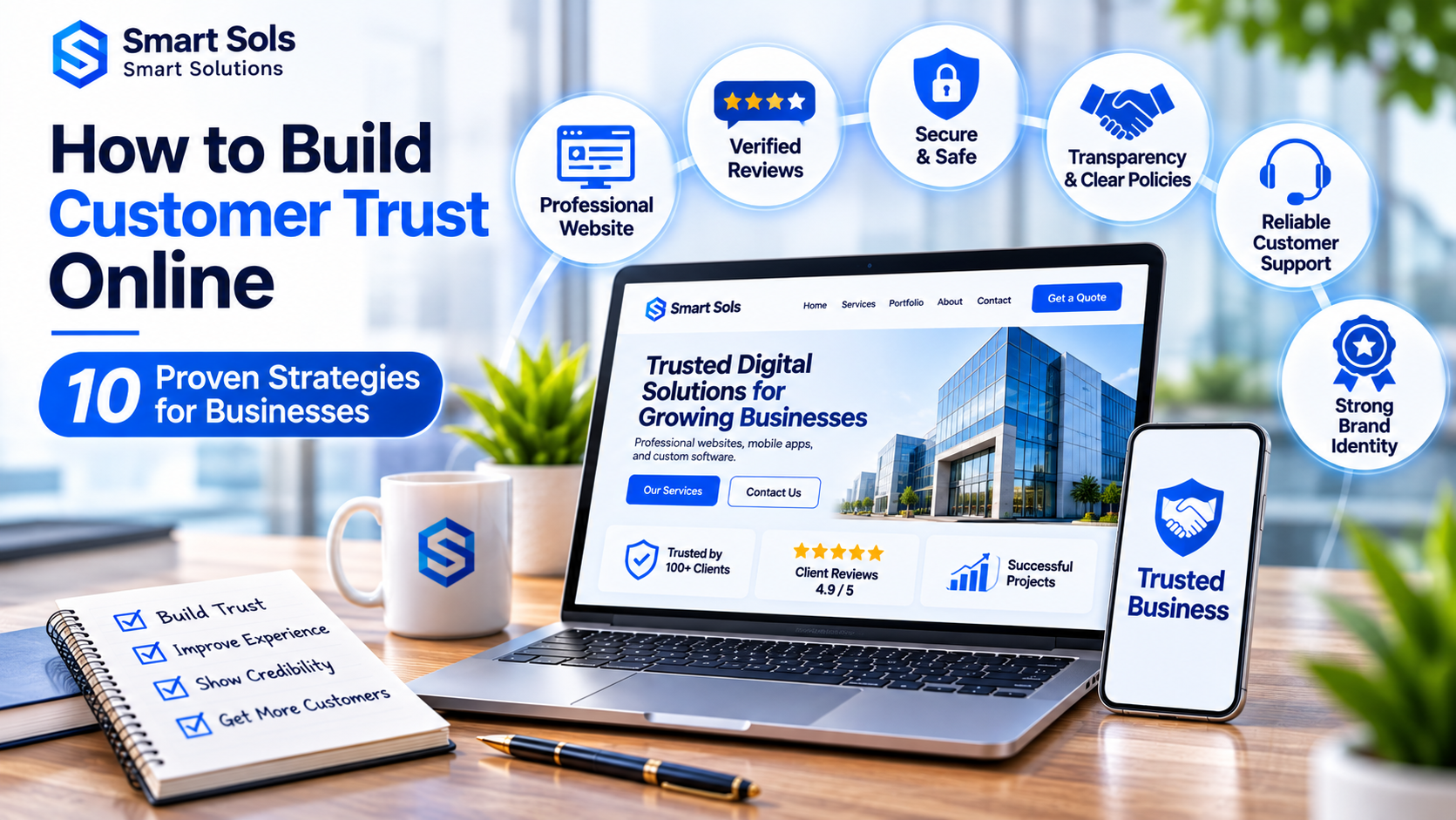
Building customer trust online is essential for businesses that want to attract new customers, increase conversions, and develop long-term relationships. In a competitive digital marketplace, customers often evaluate a company's website, reviews, transparency, and professionalism before making a purchasing decision. In this guide, we explore 10 practical strategies to build customer trust, improve your online reputation, strengthen your digital presence, and turn more visitors into loyal customers.
How to Build Customer Trust Online: 10 Proven Strategies for Businesses
Trust is one of the most important foundations of a successful business relationship.
When customers discover a company online for the first time, they often have questions: Is this business legitimate? Will it deliver what it promises? Is my personal information safe? What happens if something goes wrong?
The answers influence whether visitors contact your company, request a quotation, make a purchase, or choose a competitor.
Building trust online requires more than attractive branding. It involves transparency, consistent communication, reliable services, secure technology, and a positive customer experience.
In this article, we explore 10 practical strategies that can help businesses establish credibility and strengthen customer relationships.
1. Create a Professional and Trustworthy Website
Your website is often the first direct interaction a potential customer has with your business.
A poorly organized, outdated, or confusing website may create uncertainty, even when the company provides excellent services.
A professional website should include:
- Modern, consistent visual design.
- Clear navigation.
- Mobile-responsive layouts.
- Fast loading performance.
- Accurate business information.
- Easy-to-find contact details.
- Professional service descriptions.
- Clear calls-to-action.
- Accessible content.
Why Website Design Influences Trust
Imagine visiting two companies offering similar services.
The first has a slow website, incomplete information, and broken links.
The second provides clear explanations, an organized portfolio, and convenient communication options.
The second company may create a stronger first impression because it makes evaluating the business easier.
Practical tip: Review your website regularly and test the experience on different devices.
2. Be Transparent About Your Business
Transparency helps customers understand who they are dealing with and what they can expect.
Businesses should provide accurate and accessible information about their operations.
Important information may include:
- Company name.
- Business description.
- Services and products.
- Contact information.
- Relevant business location.
- Terms and conditions.
- Privacy policy.
- Refund or cancellation policies, where applicable.
Create an Informative About Us Page
Your About Us page should explain your company's background, expertise, values, and approach to serving customers.
Avoid unsupported claims such as being the best company in the industry.
Instead, demonstrate your experience through verifiable facts, completed projects, and relevant expertise.
3. Display Genuine Customer Reviews and Testimonials
Customer feedback can help potential buyers evaluate your business.
Reviews provide insights into actual experiences with your products, services, communication, and support.
Consider displaying:
- Genuine customer testimonials.
- Verified ratings.
- Relevant case studies.
- Client feedback.
- Reviews from recognized platforms.
How to Use Reviews Effectively
Ask satisfied customers for honest feedback after completing a project or delivering a service.
When publishing testimonials, obtain appropriate permission and avoid changing their meaning.
Do not purchase fabricated reviews or present fictional testimonials as genuine customer experiences.
Authenticity is more valuable than artificially perfect ratings.
4. Showcase Your Portfolio and Previous Work
A portfolio helps customers understand what your business can deliver.
For service companies, real project examples can provide stronger evidence than promotional statements alone.
An effective portfolio may include:
- Project name.
- Client industry.
- Business challenge.
- Services provided.
- Main features or deliverables.
- Screenshots or demonstrations.
- Outcomes that can be verified.
Use Case Studies to Demonstrate Value
A useful case study explains the client's problem, the approach taken, and the resulting solution.
If you include performance improvements or business results, make sure the figures are accurate and supported by evidence.
For example, a software development company might demonstrate how it designed a booking website that simplified the customer's reservation process.
This helps potential clients understand the company's capabilities.
5. Protect Customer Data and Website Security
Customers need confidence that their information will be handled responsibly.
Security is especially important for businesses collecting personal details, processing payments, or managing customer accounts.
Important practices include:
- Using HTTPS.
- Keeping software updated.
- Implementing appropriate access controls.
- Using secure authentication.
- Protecting stored information.
- Monitoring security vulnerabilities.
- Maintaining appropriate backups.
- Following applicable privacy requirements.
Communicate Your Privacy Practices Clearly
Explain what information your business collects, why it is needed, and how it is used.
Avoid collecting unnecessary personal information.
A privacy policy should accurately reflect your actual practices rather than relying on generic promises.
Security measures reduce risks, but no digital system can guarantee complete protection.
6. Communicate Clearly and Respond Professionally
Communication quality strongly influences customer confidence.
When customers ask questions, they expect useful information and reasonable response times.
To improve communication:
- Provide clear contact channels.
- Respond to inquiries consistently.
- Explain services in understandable language.
- Avoid unrealistic promises.
- Confirm important agreements in writing.
- Communicate delays proactively.
- Provide updates when appropriate.
Set Realistic Expectations
If a project requires several weeks, explain the expected timeline and the factors that may affect delivery.
If pricing depends on requirements, clarify what information is needed before providing a final quotation.
Customers are more likely to trust a company that communicates transparently than one that promises everything without sufficient information.
7. Make Pricing and Policies Easy to Understand
Unexpected charges and unclear conditions can damage customer relationships.
Businesses should communicate pricing structures and contractual terms as clearly as possible.
Depending on your business model, provide:
- Product or service pricing.
- What is included.
- Optional extras.
- Payment terms.
- Delivery timelines.
- Refund conditions.
- Support arrangements.
- Subscription renewal details.
What If Your Services Require Custom Quotations?
Not every business can publish fixed prices.
For custom software development, for example, costs depend on features, integrations, complexity, and project scope.
In such cases, explain how quotations are prepared and what customers receive during the proposal process.
Transparency does not always require publishing one fixed price.
8. Publish Helpful and Educational Content
Educational content allows businesses to demonstrate knowledge before customers make a purchase.
Instead of focusing entirely on promotional messages, answer questions that your audience genuinely cares about.
Useful content formats include:
- Blog articles.
- Frequently asked questions.
- Step-by-step guides.
- Comparison articles.
- Educational videos.
- Industry explanations.
- Practical checklists.
How Content Builds Credibility
Imagine a business owner searching for information about website development.
An article explaining development stages, common costs, and important considerations can help the reader make an informed decision.
If the content is useful and accurate, the reader may develop a more positive impression of the company.
Content marketing can support both trust-building and search engine visibility.
However, quality and accuracy matter more than publishing large quantities of repetitive articles.
9. Deliver a Consistent Customer Experience
Trust grows when businesses consistently meet reasonable customer expectations.
A professional customer experience should extend beyond the initial sale.
Focus on:
- Delivering agreed services.
- Meeting realistic deadlines.
- Maintaining quality standards.
- Providing clear project updates.
- Handling complaints fairly.
- Offering appropriate after-sales support.
- Following through on commitments.
Why Consistency Matters
A customer who receives excellent service once may return.
A customer who receives reliable service repeatedly may be more willing to recommend the company.
Businesses should regularly collect feedback and use it to identify opportunities for improvement.
10. Maintain a Consistent and Authentic Brand Presence
Customers may encounter your business through multiple digital channels before contacting you.
These may include:
- Your website.
- LinkedIn.
- Facebook.
- Instagram.
- Google Search.
- Email.
- Messaging applications.
Your business identity, service descriptions, and contact information should remain consistent across these channels.
Build a Recognizable Brand
Use consistent:
- Brand colors.
- Logo variations.
- Typography.
- Communication style.
- Company descriptions.
- Contact details.
A consistent brand presence helps customers recognize your company and reduces confusion.
However, visual consistency should always be supported by genuine business practices.
How to Measure Customer Trust Online
Trust is difficult to capture with a single number, but several indicators can help you evaluate customer confidence.
Customer Reviews
Monitor authentic feedback and identify recurring concerns.
Customer Retention
Measure how many customers continue using your services or return for additional purchases.
Website Conversion Rate
Track the percentage of visitors who complete meaningful actions, such as requesting quotations.
An improving conversion rate may reflect stronger trust, but it can also result from changes in traffic quality, pricing, or website usability.
Referral Customers
Track how many new customers discover your business through recommendations.
Customer Satisfaction
Collect feedback through surveys, interviews, and support interactions.
Use several indicators together rather than assuming one metric proves that customers trust your business.
Common Mistakes That Damage Customer Trust
Businesses should avoid practices such as:
- Publishing fake reviews.
- Making exaggerated promises.
- Hiding important charges.
- Using misleading advertisements.
- Ignoring customer complaints.
- Providing inconsistent information.
- Neglecting website security.
- Failing to meet agreed commitments.
- Using outdated contact information.
- Publishing inaccurate or copied content.
Even small inconsistencies can create doubts when customers are evaluating a new company.
A Practical 30-Day Customer Trust Improvement Plan
Businesses can begin improving their digital credibility through a focused four-week plan.
Week 1: Review Your Digital Presence
Audit your website, contact details, service pages, and business profiles.
Correct outdated information and resolve obvious usability problems.
Week 2: Strengthen Credibility
Update your About Us page, organize your portfolio, and request honest feedback from recent customers.
Week 3: Improve Customer Communication
Review inquiry response times, clarify quotation processes, and improve customer support information.
Week 4: Publish Useful Content and Measure Results
Publish helpful answers to common customer questions.
Review customer feedback, qualified inquiries, and website performance.
Use the findings to prioritize ongoing improvements.
Conclusion
Building customer trust online is an ongoing process that requires transparency, professionalism, reliable service, and consistent communication.
A well-designed website can create a positive first impression, while authentic reviews, clear policies, strong security practices, and helpful content can reinforce credibility.
However, lasting trust comes from delivering what your business promises.
Companies that combine a professional digital presence with dependable customer experiences can build stronger relationships and improve their opportunities for long-term growth.
Build a More Professional Digital Presence with Smart Sols
At Smart Sols, we help businesses develop professional websites, mobile applications, e-commerce platforms, and custom software solutions tailored to their requirements.
A well-structured digital platform can help your business present information clearly, improve usability, and provide customers with a more professional online experience.
Website: https://smartsols.net
Contact Smart Sols to discuss your digital development requirements and request a quotation.